
Commercial Greenhouse Insurance: Coverage, Costs & Protection Guide
Commercial greenhouse businesses depend on more than healthy plants and favorable growing conditions. They also rely on specialized buildings, heating […]
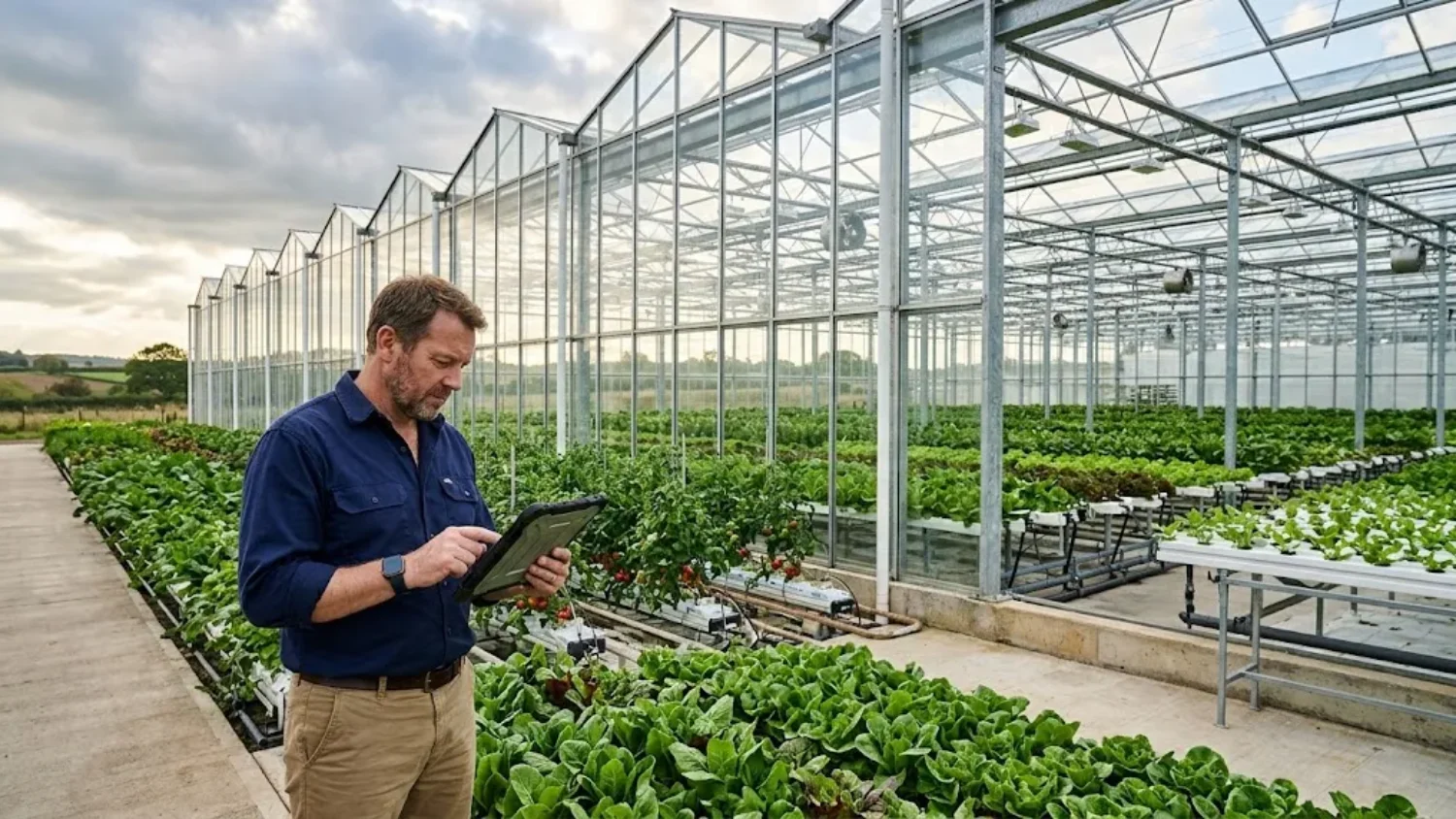

Commercial greenhouse businesses depend on more than healthy plants and favorable growing conditions. They also rely on specialized buildings, heating and cooling systems, irrigation equipment, valuable plant inventory, employees, and dependable distribution networks. Damage to any of these assets can interrupt production and create unexpected financial pressure.
Commercial greenhouse insurance helps business owners manage these risks through insurance policies designed to protect eligible property, equipment, inventory, and business operations. Depending on the coverage selected, a policy package may also address third-party liability claims, employee injuries, commercial vehicles, and income losses following certain covered events.
However, not every greenhouse insurance policy covers every business risk. A commercial property policy, for example, may protect an insured building without automatically covering all plants growing inside it. Equipment breakdown, crop protection, and business interruption may also require separate coverage or endorsements.
Understanding these differences is essential before choosing an insurance package.
This guide explains how commercial greenhouse insurance works in the United States, which coverage options greenhouse operators should consider, what influences insurance premiums, and how to evaluate policies before purchasing protection.
What Is Commercial Greenhouse Insurance?
Commercial greenhouse insurance refers to a combination of business insurance policies designed to address financial risks associated with operating a greenhouse for commercial purposes.
Unlike a small residential greenhouse, a commercial facility may contain expensive structures, automated climate-control systems, irrigation equipment, growing supplies, machinery, and thousands of plants intended for sale.
The insurance requirements depend on the size and activities of the business.
For example, a wholesale flower producer may need protection for greenhouse structures, plant inventory, delivery vehicles, and employees. A commercial vegetable grower may have different equipment, production, and crop-related risks.
Commercial greenhouse insurance is not necessarily one standardized policy. Business owners typically work with an insurance agent or broker to identify suitable coverage and combine policies according to their operations.
Who Needs Commercial Greenhouse Insurance?
This type of insurance may be relevant to:
- Commercial flower and ornamental plant growers.
- Greenhouse vegetable and fruit producers.
- Wholesale nursery businesses.
- Plant propagation and seedling operations.
- Businesses supplying plants to retailers and landscapers.
- Commercial growers serving restaurants and food distributors.
- Greenhouse operators managing multiple facilities.
A small greenhouse business may have different coverage needs from a large wholesale producer. The appropriate insurance depends on the property’s value, growing activities, location, workforce, and financial exposure.
Why Do Greenhouse Businesses Need Insurance?
Greenhouse operations face risks that can affect several parts of a business simultaneously. Unlike ordinary retail inventory, plants require continuous environmental control and can lose their commercial value when growing conditions change.
Here are some important reasons to evaluate insurance protection.
Protection Against Property Damage
Commercial greenhouses may use glass, polycarbonate panels, polyethylene coverings, metal frames, and specialized structural components.
These facilities can be exposed to severe weather, fire, falling debris, and other physical hazards.
A covered event that damages the greenhouse structure could require expensive repairs or replacement. Suitable commercial property coverage may help pay eligible costs, subject to the policy’s limits, deductibles, and exclusions.
Protection for Specialized Equipment
Heating systems, ventilation fans, cooling units, irrigation pumps, and electrical controls help maintain suitable growing conditions.
A failure involving essential equipment can affect plant health and production schedules.
Equipment breakdown insurance may address certain sudden and accidental mechanical or electrical failures that are not necessarily covered by a standard commercial property policy.
Protection Against Liability Claims
Customers, contractors, suppliers, and delivery personnel may visit greenhouse facilities.
A visitor who slips on a wet walkway or is injured near operating equipment could make a claim against the business.
General liability insurance may help cover eligible third-party bodily injury and property damage claims, including certain legal defense expenses.
Financial Support During Business Interruptions
A fire or another covered property loss may prevent a greenhouse from operating normally.
Even after physical repairs begin, the business may need time to restore equipment, replace damaged structures, and resume production.
Business interruption insurance may help replace eligible lost income and continuing expenses when the interruption meets the policy’s requirements.
Employee-Related Protection
Greenhouse employees may work with machinery, tools, fertilizers, lifting equipment, and other workplace hazards.
Workers’ compensation insurance helps address eligible workplace injuries and occupational illnesses according to applicable state laws and policy terms.
Types of Commercial Greenhouse Insurance Coverage
Different insurance policies address different risks. Understanding their purposes can help greenhouse owners identify coverage gaps before requesting quotes.
1. Commercial Property Insurance
Commercial property insurance is a fundamental coverage option for many greenhouse businesses.
Depending on the policy, it may protect insured buildings, structural components, business equipment, furniture, supplies, and other eligible property against covered physical losses.
Potentially insured assets include:
- Greenhouse structures and building components.
- Approved glass and polycarbonate materials.
- Storage and packing facilities.
- Irrigation and water distribution equipment.
- Office furniture and business electronics.
- Eligible tools, machinery, and growing supplies.
Greenhouse owners should confirm how their specific structures are classified. A standard commercial property policy may not automatically provide appropriate protection for every greenhouse design or covering material.
It is also important to understand property valuation.
Replacement cost coverage generally considers the cost of replacing damaged property with comparable new property, subject to policy conditions.
Actual cash value coverage generally accounts for depreciation when determining the value of damaged property.
The difference can affect how much money a business receives after a covered claim.
2. Greenhouse Crop and Plant Insurance
Plants can represent a substantial portion of a greenhouse business’s total assets.
A commercial grower may maintain thousands of plants at different stages of development. Losing that inventory can affect revenue, customer commitments, and future production.
Plant protection may be available through specialized nursery crop insurance or other eligible stock and inventory coverage.
One important federal option is the USDA Risk Management Agency’s Nursery Value Select (NVS) program.
NVS is an inventory-based nursery crop insurance pilot that allows eligible nursery producers to select a dollar amount of coverage based on their risk management needs.
Beginning with the 2026 crop year, NVS replaced the Nursery Field Grown and Container (FG&C) program for new purchases. The previous FG&C program is no longer available for purchase after the 2025 crop year.
However, not every greenhouse operator automatically qualifies.
According to USDA program requirements, eligible producers must generally:
- Operate as a qualifying wholesale nursery.
- Receive at least 40% of gross income from wholesale marketing of plants to eligible buyers.
- Maintain a wholesale catalog provided to customers and used in plant sales.
- Meet applicable plant eligibility and inventory documentation requirements.
The program provides different coverage considerations for container-grown and field-grown nursery plants.
Greenhouse owners should review the official USDA Nursery Value Select program information and speak with an authorized crop insurance agent before assuming their plants qualify.
For additional information about related plant-growing operations, BusinessNexa also provides guidance on protecting nursery plants and commercial growing inventory.
3. General Liability Insurance
General liability insurance helps protect greenhouse businesses against certain third-party claims.
These claims may involve bodily injury, property damage, and other covered liability exposures.
For example, a wholesale customer visits a greenhouse to inspect plants. The customer slips on a wet surface near an irrigation area and suffers an injury.
The business could face medical expenses, legal costs, or a liability claim.
General liability insurance may help address eligible claims according to the policy’s conditions and limits.
This coverage may also be important when supplying products to commercial customers, retailers, landscaping companies, and distributors.
Some customers and landlords may require specific liability limits or additional insured arrangements as part of their contracts.
4. Equipment Breakdown Insurance
Commercial greenhouse equipment often operates for extended periods to maintain temperature, ventilation, irrigation, and humidity.
An internal mechanical or electrical failure can interrupt production and create additional financial losses.
Equipment breakdown insurance may help cover certain sudden and accidental equipment failures.
Important equipment to evaluate includes:
- Commercial boilers and heating systems.
- Cooling and refrigeration equipment.
- Ventilation fans and motors.
- Irrigation pumps.
- Electrical panels and controls.
- Automated climate-management systems.
Standard commercial property insurance and equipment breakdown coverage are not interchangeable.
Owners should ask whether resulting plant damage, spoiled inventory, and business interruption losses are included or require additional coverage.
5. Business Interruption Insurance
Business interruption insurance, also called business income insurance, may help replace lost income when a covered property loss forces a business to suspend or reduce normal operations.
For example, a covered fire damages the electrical system and heating equipment inside a greenhouse. Production stops while repairs are completed.
During this period, the business may still have ongoing expenses, including:
- Employee wages, where covered.
- Rent or property payments.
- Utilities and continuing operating expenses.
- Certain loan-related business expenses.
- Additional costs of maintaining temporary operations.
Business interruption insurance may help with eligible lost income and continuing expenses, subject to the policy’s requirements.
Owners should review the waiting period, restoration period, coverage limit, and events that trigger payment.
6. Workers’ Compensation Insurance
Workers’ compensation insurance addresses eligible workplace injuries and occupational illnesses.
Greenhouse employees may perform tasks involving plant handling, machinery operation, potting, transplanting, packaging, shipping, and maintenance.
Coverage generally helps provide eligible medical and wage-replacement benefits according to applicable state laws.
Workers’ compensation requirements vary between states. Business owners should check the rules that apply to their location, workforce, and employment arrangements.
7. Commercial Auto Insurance
Greenhouse businesses that use vehicles for commercial purposes should evaluate commercial auto insurance.
Vehicles may transport plants, deliver orders, collect supplies, or travel between growing facilities.
Personal auto insurance may not adequately cover certain business-related vehicle activities.
Commercial auto insurance may address eligible vehicle damage and liability exposures, depending on the policy.
Businesses should also ask about hired and non-owned auto coverage if employees use personal or rented vehicles for company activities.
Commercial Greenhouse Insurance Coverage Comparison
The following comparison summarizes the main coverage options and explains what greenhouse owners should examine when evaluating policies.
| Coverage type | Main purpose | Example of a risk | Important consideration |
|---|---|---|---|
| Commercial property | Protects insured buildings and business property | Covered storm damages greenhouse panels | Construction materials, exclusions, and replacement values |
| Crop and plant insurance | Protects eligible nursery plant inventory | Qualifying loss to insured nursery plants | Plant eligibility and program requirements |
| General liability | Addresses certain third-party claims | Customer injury on greenhouse premises | Liability limits and exclusions |
| Equipment breakdown | Addresses qualifying mechanical or electrical failures | Sudden boiler breakdown | Internal failure versus external physical damage |
| Business interruption | Helps replace eligible lost business income | Operations stop after covered property damage | Waiting period and restoration period |
| Workers’ compensation | Addresses eligible workplace injuries | Employee injured while handling equipment | State-specific legal requirements |
| Commercial auto | Protects against covered business vehicle risks | Delivery vehicle involved in an accident | Vehicle use, drivers, and coverage limits |
Important: This table is a general educational comparison, not a description of one standard insurance package. Some protections require separate policies, endorsements, or eligibility approval. Always review the actual policy documents.
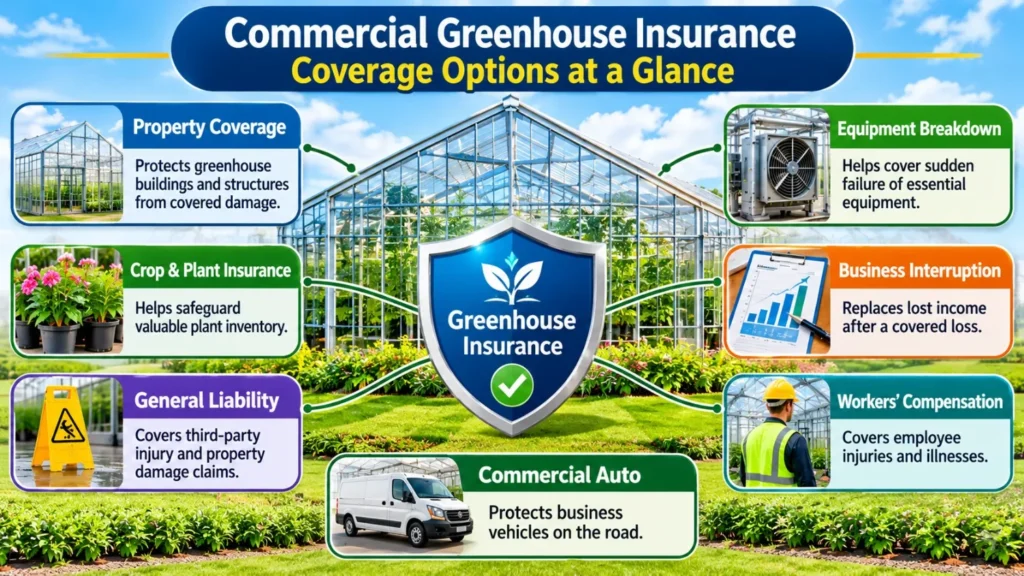
What Does Commercial Greenhouse Insurance Cover?
The protection available depends on the insurer, policy wording, selected limits, and endorsements.
A commercial greenhouse insurance package may include protection for:
Greenhouse Building Damage
Eligible commercial property coverage may address insured structures and components damaged by covered events.
For example, if an insured windstorm damages a greenhouse roof, the policy may help pay eligible repair or replacement costs.
However, weather-related losses may involve specific deductibles, limitations, or exclusions.
Equipment and Machinery
Covered property or equipment breakdown protection may address eligible damage to machinery and essential systems.
The policy should clearly identify valuable equipment and explain which causes of loss are covered.
Business Supplies and Contents
Commercial property coverage may include eligible supplies such as growing containers, fertilizers, packaging materials, tools, and office equipment.
Owners should confirm whether property stored outside the main greenhouse or at another location is insured.
Plant Inventory
Plant inventory requires special attention.
Some commercial property policies exclude or limit coverage for nursery stock, outdoor plants, and growing inventory.
Specialized nursery crop insurance may be more appropriate for certain eligible producers.
Business Income Losses
Business interruption coverage may help replace eligible lost income following a covered property event.
However, it does not automatically cover every production delay, market downturn, or loss of sales.
What Does Greenhouse Insurance Typically Not Cover?
Insurance exclusions differ between policies, but greenhouse owners should pay particular attention to the following risks.
Normal Wear and Tear
Ordinary deterioration, corrosion, gradual damage, and routine maintenance problems are generally not the purpose of property insurance.
A greenhouse roof that gradually deteriorates over several years may not qualify for coverage simply because it eventually requires replacement.
Certain Flood Losses
Standard commercial property policies frequently treat flood damage separately from other water-related events.
A greenhouse located in a flood-prone area may need a separate flood insurance policy or an appropriate commercial flood coverage arrangement.
Owners should distinguish between floodwater, rain entering through a damaged roof, and water released by a broken pipe because policies may treat these events differently.
Certain Pests and Plant Diseases
Insects, fungi, plant diseases, and infestations can cause significant inventory losses.
However, ordinary commercial property insurance does not automatically cover every plant disease or pest-related loss.
Specialized crop insurance programs have their own definitions of covered causes of loss, eligible plants, and exclusions.
Poor Maintenance
Losses resulting from neglected maintenance, known defects, or failure to follow policy requirements may be excluded or disputed.
Maintaining heating systems, electrical installations, roofs, and irrigation equipment is important for both safety and insurance compliance.
Certain Power Outages
An electrical outage may interrupt heating, cooling, or irrigation systems and damage plants.
However, utility interruption coverage is not necessarily included in every business insurance policy.
Some insurers offer additional protection for qualifying service interruptions or resulting spoilage.
Uncovered Equipment Failures
A standard property policy may not cover every internal mechanical or electrical breakdown.
Greenhouse owners who depend on automated systems should specifically ask about equipment breakdown protection.
These are general examples rather than a complete list of exclusions. Always read the policy wording and ask the insurance provider to explain unclear restrictions.
How Much Does Commercial Greenhouse Insurance Cost?
Commercial greenhouse insurance costs vary according to the business’s size, location, property values, growing activities, and selected coverage.
There is no single national premium that applies to every greenhouse.
A small operation with limited equipment may have different insurance requirements from a large wholesale facility operating several buildings and maintaining substantial plant inventory.
Rather than relying on an advertised average, business owners should understand the factors that influence their individual quotes.
Factors That Affect Greenhouse Insurance Premiums
Greenhouse size and construction: Larger facilities may require higher property limits. Glass, polycarbonate, and other construction materials also have different replacement costs and risk characteristics.
Business location: Insurers may evaluate exposure to hurricanes, tornadoes, hailstorms, heavy snow, wildfires, and flooding.
Equipment values: Expensive boilers, irrigation systems, climate-control technology, and specialized machinery may increase the amount of protection required.
Plant inventory: Businesses holding valuable plant inventory may need additional or specialized coverage.
Employees: Payroll, job responsibilities, and workplace risk classifications can influence workers’ compensation premiums.
Coverage limits and deductibles: Higher coverage limits generally increase the amount of protection purchased. Higher deductibles may reduce premiums but increase the owner’s out-of-pocket costs after a covered claim.
Claims history: Previous property damage, equipment failures, and liability claims may influence underwriting decisions.
How Can Greenhouse Owners Manage Insurance Costs?
Business owners can take practical steps to improve risk management and obtain more suitable insurance quotes.
- Inspect greenhouse structures regularly.
- Maintain heating and electrical systems.
- Install appropriate fire detection equipment.
- Keep accurate plant and property inventories.
- Protect essential equipment against freezing and water damage.
- Compare quotes from multiple qualified insurers.
- Review coverage after expanding the business.
Avoid reducing important protection simply to obtain the lowest premium. A cheaper policy may contain higher deductibles, lower limits, or exclusions that create substantial financial gaps.
Practical Example: How a Greenhouse Business Could Experience a Covered Loss
Consider a hypothetical wholesale greenhouse business operating in the southeastern United States.
The business grows ornamental plants and maintains several greenhouse structures with automated irrigation, heating, and ventilation systems.
A severe storm moves through the area and damages part of the greenhouse roof. Rain enters the affected section, damaging some electrical equipment and a portion of the plant inventory.
The owner must temporarily close the affected growing area while repairs are completed.
This situation could create several different financial exposures.
1. Structural Repair Costs
If the storm damage is covered, commercial property insurance may help pay eligible expenses to repair the insured greenhouse structure.
The payment would depend on the property’s insured value, deductible, valuation method, and applicable policy conditions.
2. Equipment Damage
If the electrical equipment suffers physical damage from a covered cause of loss, property coverage may respond.
If a separate internal mechanical or electrical breakdown occurs, equipment breakdown coverage may be relevant instead.
The exact cause of damage matters when determining which policy applies.
3. Plant Inventory Losses
The damaged plants may not automatically qualify for compensation under the commercial property policy.
The owner would need to examine applicable nursery stock coverage or an eligible crop insurance arrangement.
For an eligible wholesale nursery, USDA’s Nursery Value Select program may be worth investigating, subject to its requirements and covered causes of loss.
4. Lost Business Income
If the covered physical damage forces the business to suspend operations, business interruption insurance may help replace eligible lost income and continuing expenses.
The policy’s waiting period, restoration period, and coverage limits would determine the available protection.
5. Liability Considerations
If a visitor or contractor is injured because of a covered incident involving the business, general liability insurance may address an eligible third-party claim.
This would be a separate consideration from the property damage claim.
What Can the Owner Learn From This Example?
One storm can create multiple types of financial losses.
A greenhouse business may need property coverage, equipment protection, plant inventory insurance, business interruption coverage, and liability protection to address different exposures.
This example is illustrative only. It does not describe an actual insurance claim or guarantee that any particular loss would be covered. Actual claim outcomes depend on the policy, cause of loss, exclusions, deductibles, and applicable conditions.
How to Choose the Right Commercial Greenhouse Insurance
Selecting suitable coverage requires a clear understanding of the business’s assets, operations, and potential financial losses.
Step 1: Assess Your Greenhouse Business Risks
Identify the most important risks associated with your operation.
Consider the types of plants you grow, the number of greenhouse structures you operate, the equipment required for production, and whether customers visit the premises.
Also evaluate local weather exposure, employee activities, delivery operations, and dependence on automated growing systems.
Step 2: Calculate Property Replacement Values
Prepare an accurate list of greenhouse structures, machinery, and business property.
Estimate realistic replacement costs instead of relying only on original purchase prices.
Include structural materials, permanently installed equipment, storage areas, and eligible business contents.
If you lease the property, review your lease obligations. A landlord’s policy may not protect your equipment, inventory, or business improvements.
Step 3: Document Plant Inventory
Maintain records of plant types, quantities, growing stages, inventory locations, and relevant purchase and sales information.
Photographs, invoices, wholesale catalogs, and updated inventory records can help establish the value of plants.
These records are particularly important when applying for specialized nursery crop insurance.
Step 4: Identify Necessary Coverage
Match your business risks with the appropriate insurance options.
A greenhouse that welcomes customers may need particular attention to general liability. A facility relying on automated climate-control systems may need equipment breakdown protection.
A wholesale nursery with substantial plant inventory should investigate eligible crop insurance options.
Not every business needs every policy. The goal is to address genuine financial exposures.
Step 5: Compare Insurance Quotes
Contact several insurers or an independent insurance broker familiar with greenhouse and agricultural operations.
Compare more than the premium.
Review coverage limits, deductibles, covered causes of loss, exclusions, valuation methods, endorsements, and claims procedures.
Provide accurate information about your buildings, equipment, inventory, and business activities.
Step 6: Review Policy Exclusions
Ask how the policy treats wind, hail, flooding, freezing temperatures, plant diseases, equipment failure, and power interruptions.
Request written explanations when coverage terms are unclear.
This can help reduce misunderstandings when a claim occurs.
Step 7: Work With a Qualified Insurance Professional
Commercial greenhouse insurance may involve specialized underwriting and agricultural coverage considerations.
A licensed insurance agent or broker familiar with greenhouse operations can help identify relevant policy options and explain differences between coverage arrangements.
For federal crop insurance, consult an authorized crop insurance agent who understands USDA nursery program requirements.
You can also explore BusinessNexa’s related guide to insurance considerations for commercial greenhouse growers.
How to Prepare for a Greenhouse Insurance Quote
Preparing relevant documents before requesting a quote can make the process easier.
Business Information
Prepare your legal business name, ownership structure, operating address, years in business, primary products, and sales activities.
Greenhouse Property Details
Provide the total greenhouse area, number of structures, construction materials, building age, heating and cooling systems, and major electrical and irrigation installations.
Equipment and Inventory Records
Create a list of machinery and equipment with estimated replacement values.
Also prepare current plant inventory records, including plant categories, quantities, growing stages, and relevant sales documentation.
Employee and Vehicle Information
If the business employs workers or operates commercial vehicles, prepare relevant payroll, employee duties, vehicle details, and business-use information.
Previous Claims History
Insurers may ask about earlier property damage, equipment failures, liability incidents, and other relevant insurance claims.
Provide accurate information about previous losses and existing coverage.
Common Commercial Greenhouse Insurance Mistakes
Even experienced greenhouse owners can overlook important insurance details.
Assuming the Building Policy Covers Every Plant
Insuring the greenhouse structure does not automatically mean that all plants inside it are insured.
Building coverage, business contents, and plant inventory may be treated separately.
Confirm whether your policy specifically covers plants and which causes of loss qualify.
Choosing Insurance Based Only on Price
Lower premiums may come with higher deductibles, limited coverage, or important exclusions.
Compare the actual protection offered rather than selecting a policy based only on its cost.
Underestimating Replacement Costs
Outdated property valuations may leave a business underinsured.
Review replacement estimates regularly and update coverage when new structures or equipment are added.
Ignoring Equipment Breakdown Risks
Heating, cooling, and irrigation systems are often essential to production.
Understand the difference between ordinary property coverage and equipment breakdown protection.
Overlooking Business Interruption
Physical repairs may not allow the business to resume production immediately.
Evaluate whether lost income and continuing expenses could create a significant financial burden.
Failing to Update Insurance After Expansion
Adding structures, purchasing machinery, increasing plant inventory, and hiring employees can change a business’s insurance requirements.
Review coverage whenever significant operational changes occur.
Is Commercial Greenhouse Insurance Worth It?
For many commercial greenhouse operators, insurance is an important part of managing financial risk.
Greenhouse businesses may invest substantial amounts in specialized structures, equipment, inventory, and production systems. An unexpected event can damage several of these assets simultaneously.
Insurance can help reduce the financial impact of certain covered losses, but it cannot eliminate every business risk.
Greenhouse owners should combine appropriate insurance with preventive measures, including:
- Regular structural inspections.
- Proper heating and electrical maintenance.
- Fire prevention systems.
- Backup power arrangements where appropriate.
- Reliable irrigation and temperature monitoring.
- Accurate inventory and financial records.
- Emergency response planning.
The value of commercial greenhouse insurance depends on the operation’s financial exposure, available coverage, policy cost, and ability to absorb unexpected losses.
For businesses operating nurseries alongside greenhouse facilities, it may also be useful to understand how commercial nursery businesses approach insurance protection.
Frequently Asked Questions About Commercial Greenhouse Insurance
1. What Is Commercial Greenhouse Insurance?
Commercial greenhouse insurance is a combination of business insurance policies designed to protect greenhouse operations against certain financial losses.
Depending on the selected coverage, it may address greenhouse structures, equipment, liability claims, eligible plant inventory, and business interruption losses.
2. How Much Does Commercial Greenhouse Insurance Cost?
The cost depends on greenhouse size, location, construction materials, equipment values, plant inventory, employees, claims history, and selected coverage limits.
There is no universal premium for every commercial greenhouse.
Requesting personalized quotes from insurers familiar with greenhouse operations is the most reliable way to estimate costs.
3. Does Commercial Greenhouse Insurance Cover Plants?
Not necessarily.
Commercial property policies may exclude or limit coverage for plants, nursery stock, and outdoor growing inventory.
Eligible wholesale nursery businesses may investigate USDA’s Nursery Value Select program for specialized crop protection.
Plant eligibility, covered causes of loss, valuation methods, and documentation requirements should be confirmed before purchasing coverage.
4. Does Greenhouse Insurance Cover Storm Damage?
Some commercial greenhouse policies cover certain storm-related damage, including qualifying wind or hail losses.
However, protection varies by policy. Flooding, storm surge, snow loading, and other weather-related events may involve separate exclusions, deductibles, or coverage conditions.
5. Are Greenhouse Heating Systems Covered by Insurance?
Heating systems may be covered under commercial property insurance when damaged by an insured cause of loss.
However, internal mechanical or electrical breakdowns may require separate equipment breakdown coverage.
Owners should also ask whether resulting plant damage and business interruption expenses are covered.
6. Is Business Interruption Insurance Necessary for a Greenhouse?
Business interruption insurance may be valuable for greenhouse businesses that depend on continuous production and regular customer deliveries.
If a covered property loss forces the business to suspend operations, this coverage may help replace eligible lost income and continuing expenses.
Its suitability depends on financial reserves, potential recovery time, and operational risks.
7. Can Small Greenhouse Businesses Get Insurance?
Yes. Small commercial greenhouse operators can explore business insurance through commercial insurers and agricultural insurance specialists.
Available policies depend on the business’s location, property, operations, and insurer requirements.
Smaller businesses should focus on protecting their most valuable assets and addressing their most significant liability exposures.
8. Does USDA Offer Insurance for Commercial Greenhouse Plants?
USDA’s Risk Management Agency offers the Nursery Value Select program, an inventory-based federal crop insurance pilot for eligible nursery producers.
Beginning with the 2026 crop year, it replaced the Nursery Field Grown and Container program.
Eligibility includes qualifying wholesale marketing activities, a wholesale catalog, and compliance with program rules.
Not every greenhouse business qualifies. Owners should consult an authorized crop insurance agent for current eligibility and coverage details.
Official resource: USDA Nursery Value Select.
9. Does Greenhouse Insurance Cover Employee Injuries?
Employee injuries are generally addressed through workers’ compensation insurance rather than ordinary commercial property insurance.
Workers’ compensation generally provides eligible benefits for work-related injuries and occupational illnesses.
Requirements differ by state, so employers should check the rules that apply to their business.
10. How Often Should Greenhouse Insurance Be Reviewed?
Greenhouse insurance should generally be reviewed at least once a year.
Owners should also review coverage after adding greenhouse structures, purchasing expensive equipment, increasing plant inventory, hiring employees, expanding locations, or changing business activities.
Regular reviews help ensure that insurance coverage continues to reflect the business’s current needs.
Final Thoughts on Commercial Greenhouse Insurance
Commercial greenhouse insurance plays an important role in protecting businesses that depend on specialized structures, equipment, plant inventory, and consistent production.
However, purchasing a standard business insurance policy does not automatically address every risk associated with greenhouse operations.
Owners should evaluate commercial property insurance, plant and crop protection, general liability, equipment breakdown coverage, business interruption, workers’ compensation, and commercial auto insurance according to their specific requirements.
For eligible wholesale nursery producers, USDA’s Nursery Value Select program may provide an additional option for managing certain plant inventory risks.
The most effective approach is to maintain accurate property and inventory records, understand policy exclusions, compare insurance providers, and review coverage whenever the business changes.
Ultimately, the right commercial greenhouse insurance strategy is one that protects the assets your business depends on while providing financial support against risks you cannot reasonably eliminate.
admin
Practical business guides, useful tools, and technology insights from BusinessNexa.
Work smarter with practical business tools.
Explore useful calculators, guides and tools for modern businesses.