
Revenue Protection: How Crop Insurance Works
Revenue protection is a type of federal crop insurance designed to help eligible farmers manage the financial risk associated with […]
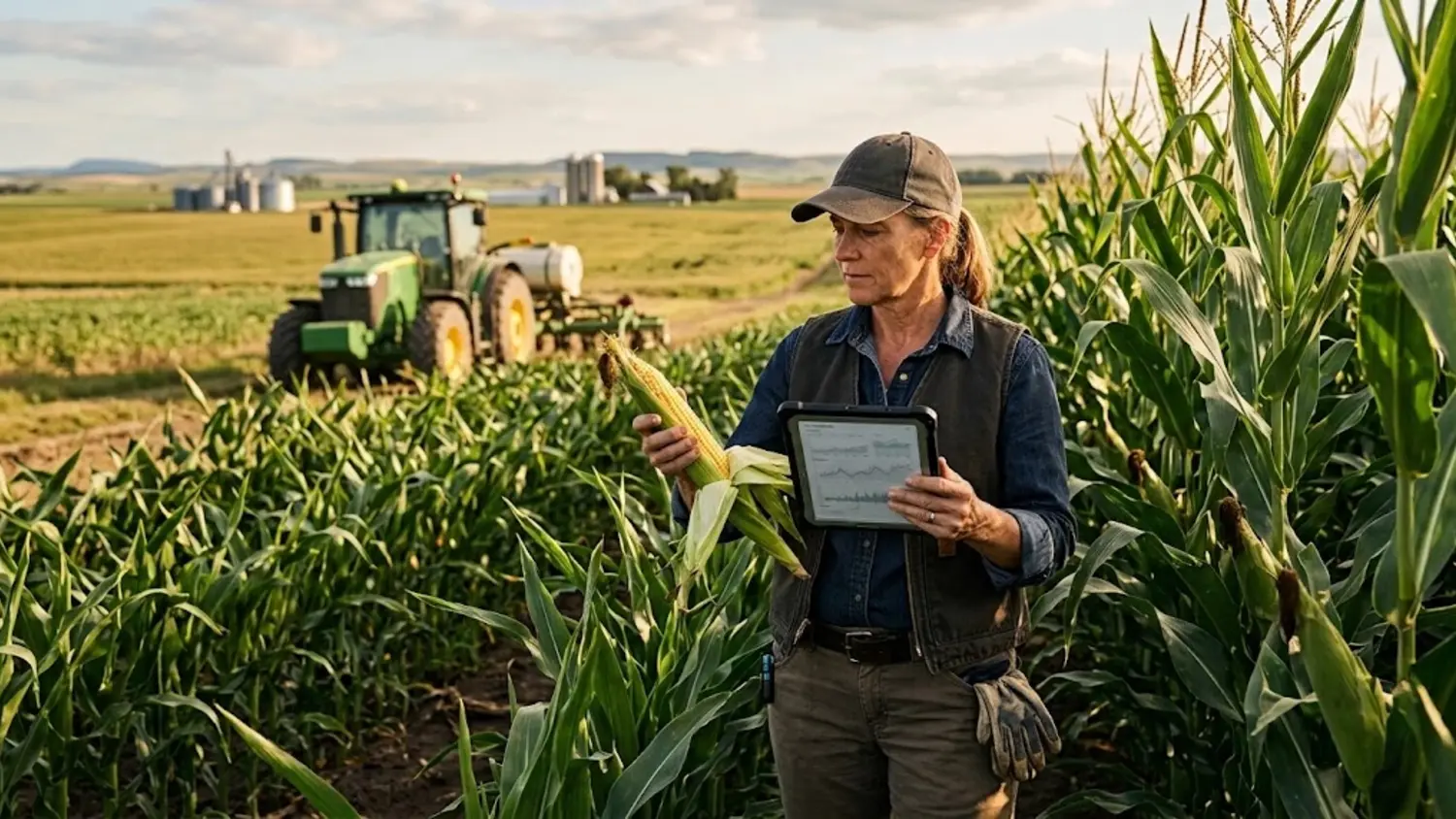

Revenue protection is a type of federal crop insurance designed to help eligible farmers manage the financial risk associated with changes in crop yields and prices. Instead of focusing only on how much a farmer produces, the policy uses revenue-related calculations to determine whether a covered loss has occurred.
For farmers, that distinction matters. A good harvest does not always result in strong revenue if crop prices fall, while a poor harvest can create a financial problem even when prices are favorable. Revenue protection is designed to address these risks within the specific rules of the insurance policy.
What Is Revenue Protection?
Revenue protection is a crop insurance plan that protects eligible producers against certain insured revenue losses. Under the policy, the amount of protection is generally based on factors such as the producer’s approved yield, the applicable projected price, and the selected coverage level.
The policy can account for revenue losses associated with yield reductions and changes in the relevant crop price. However, it does not guarantee a farm’s overall profit or reimburse every expense associated with running an agricultural operation.
The U.S. Department of Agriculture’s Risk Management Agency (RMA) identifies Revenue Protection as a federal crop insurance plan and explains that its calculation can account for both yield losses and changes between projected and harvest prices.
How Does Revenue Protection Work?
The basic concept is easier to understand when you separate the process into a few steps.
1. Establish the approved yield
The policy uses an approved yield for the insured crop. This figure is based on the applicable crop insurance rules and the producer’s production history.
2. Determine the applicable price
A projected price is established under the policy’s price discovery provisions. For qualifying Revenue Protection policies, the harvest price can also affect the final revenue calculation.
3. Select a coverage level
The farmer chooses an available coverage level. The selected percentage determines how much of the calculated revenue guarantee is protected.
4. Calculate the revenue guarantee
The applicable yield, price, and coverage level are combined according to the policy provisions to establish the amount of insured protection.
5. Compare the final revenue calculation
At the end of the insurance period, the insurer determines the applicable revenue using the policy’s rules. If the resulting amount falls below the insured guarantee and all claim requirements are satisfied, an indemnity may be payable.
The exact calculation varies by crop and policy, so farmers should not rely on a simplified formula when estimating an actual claim.
A Simple Revenue Protection Example
Suppose a farmer has an approved yield of 180 bushels per acre and the applicable projected price is $5 per bushel.
The basic expected revenue would be:
180 × $5 = $900 per acre
If the farmer selects an 80% coverage level, a simplified illustration would produce:
$900 × 80% = $720 per acre
This is only an educational example. It is not an insurance quote or a prediction of a claim payment. Actual Revenue Protection calculations can involve the applicable harvest price, production records, acreage, unit structure, and other policy provisions.
What Can Cause a Revenue Loss?
Farm revenue can change for several reasons.
Lower-than-expected yields
Weather events, disease, insects, and other covered causes can reduce production. When the resulting revenue falls below the policy’s guarantee, the loss may qualify for an indemnity if all requirements are met.
Changes in crop prices
Market prices can move between the time coverage is established and the end of the insurance period. Revenue Protection can account for qualifying price changes under its specific price provisions.
Lower yields and lower prices together
This can create a particularly difficult situation for producers. A farm may harvest less than expected while also receiving a lower price for what it produces.
Revenue protection considers these factors within the policy’s calculation rather than looking at production alone.
Revenue Protection vs. Yield Protection
Revenue Protection and Yield Protection are not the same type of coverage.
Yield Protection primarily focuses on a covered reduction in production compared with the insured yield. Revenue Protection is designed around a revenue guarantee and can incorporate price changes under its applicable provisions.
That difference can be important for producers whose financial risk is strongly affected by both production and market prices.
Neither policy is automatically better for every farm. The right choice depends on the crop, county, available coverage, premium, production history, marketing exposure, and the producer’s ability to absorb a loss.
What Revenue Protection Does Not Cover
One of the most common misunderstandings is assuming that revenue protection covers every reason a farm earns less money.
It does not.
For example, a policy does not automatically reimburse:
- Higher fertilizer or fuel costs
- Unexpected labor expenses
- Loan payments
- Lower overall farm profit
- Every market loss
- Every business decision
- Revenue that falls outside the policy’s definitions
Crop insurance follows specific policy provisions. A decline in a farm’s accounting profit does not automatically mean that an insurance claim exists.
How Much Revenue Protection Should a Farmer Choose?
There is no single coverage level that is right for every producer.
Before choosing coverage, consider:
- Historical yield variation
- Crop price volatility
- Production costs
- Debt obligations
- Land and equipment expenses
- Available cash reserves
- Existing crop insurance
- The premium associated with the selected coverage level
A higher coverage level may provide more protection, but it can also increase the cost of insurance. The goal is to choose coverage that fits the farm’s actual risk rather than simply selecting the highest available percentage.
What Records Should Farmers Keep?
Good records make crop insurance easier to manage.
Depending on the policy, farmers may need production records, acreage information, sales documentation, historical yield information, and other records requested by the insurance provider.
Keep records organized by crop year and avoid waiting until a loss occurs to locate important documents.
It is also useful to discuss recordkeeping requirements with an authorized crop insurance agent before purchasing coverage.
Revenue Protection and Whole-Farm Coverage
Revenue Protection is generally associated with individual insured crops, while Whole-Farm Revenue Protection is designed to provide a revenue-based safety net across eligible commodities on a qualifying farm.
Farmers with several commodities may therefore want to compare the two approaches rather than assuming that one policy fits every operation.
For a more specific explanation of the broader concept, read our guide to what revenue protection means for farmers.
Producers with diversified operations can also learn more about whole-farm revenue coverage.
Questions to Ask a Crop Insurance Agent
Before purchasing coverage, ask:
- Which Revenue Protection plans are available for my crop and county?
- How is my approved yield determined?
- Which coverage levels are available?
- How is the projected price established?
- How could the harvest price affect my coverage?
- What records will I need to maintain?
- What deadlines apply to my policy?
- Which losses or situations are excluded?
Getting these questions answered before the policy is purchased can prevent confusion later.
Frequently Asked Questions
Does Revenue Protection guarantee a farm’s profit?
No. Revenue Protection protects insured crop revenue under the applicable policy. It does not guarantee that the farm will make a profit after expenses.
Does Revenue Protection cover low crop prices?
Price changes can affect the Revenue Protection calculation under the applicable policy provisions. Whether a payment is due depends on the final revenue calculation and other claim requirements.
Can Revenue Protection cover both yield and price risk?
Yes. Revenue Protection is designed to consider revenue losses involving yield and price under its specific policy formula.
Is Revenue Protection available for every crop?
No. Availability depends on the crop, location, policy provisions, and applicable insurance year.
Final Thoughts
Revenue Protection can help eligible farmers manage some of the financial uncertainty created by changing yields and crop prices. Its value comes from providing a defined level of insured revenue protection rather than guaranteeing a farm’s total income or profit.
Because crop insurance rules can vary by crop and insurance year, farmers should review current USDA RMA information and discuss their specific operation with an authorized crop insurance agent before choosing coverage.
admin
Practical business guides, useful tools, and technology insights from BusinessNexa.


Work smarter with practical business tools.
Explore useful calculators, guides and tools for modern businesses.

