
African Bank Bridging Loan: Business Finance Options for South African Businesses
When a business receives a large order, wins a contract or completes a project, it may need to spend money […]


When a business receives a large order, wins a contract or completes a project, it may need to spend money before receiving payment from its customer. This creates a cash-flow gap that can make it difficult to pay suppliers, purchase materials or cover everyday operating expenses.
Short-term business finance can help companies manage these situations. South African business owners searching for an African Bank bridging loan may be looking for funding that covers immediate expenses while they wait for expected business income.
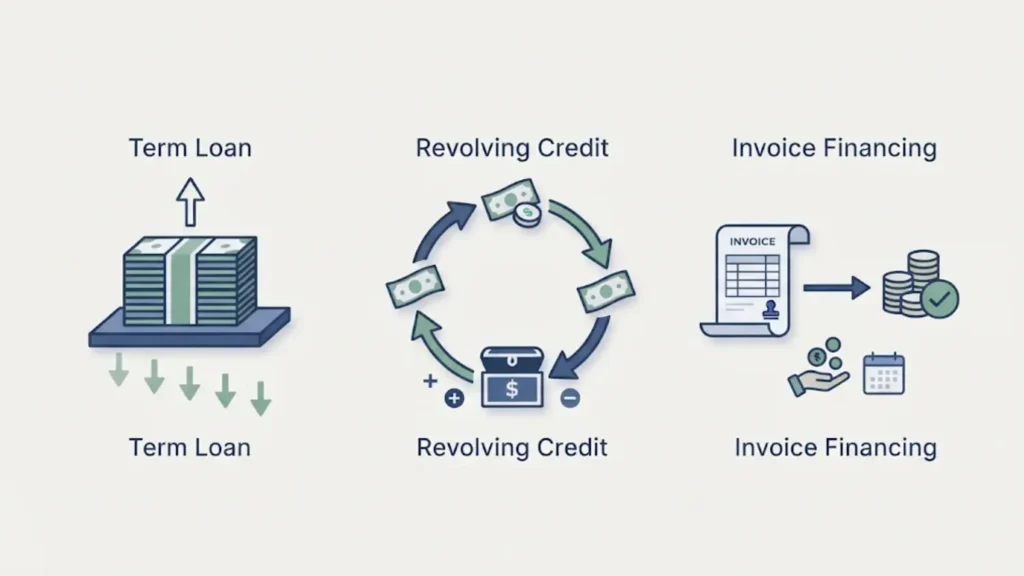
African Bank has expanded its business banking services with financing options for micro, small and medium-sized enterprises (MSMEs). Its digital lending proposition, launched in August 2025, included business term loans, revolving lines of credit and invoice financing.
These products can address different working-capital requirements, although their terms and structures are not necessarily identical to a traditional bridging loan. Understanding what African Bank offers, who may qualify and what borrowing could cost can help businesses make a more informed decision.
Does African Bank Offer Bridging Loans?
African Bank has introduced business lending solutions that can help eligible South African businesses access working capital. Its digital MSME lending platform was launched with three main financing options:
- Business term loans
- Revolving lines of credit
- Invoice financing
These products may help businesses manage funding gaps associated with supplier payments, outstanding invoices and operating expenses.
However, it is important to distinguish between a general bridging finance requirement and a specific bank product. African Bank’s publicly reported digital lending proposition includes the facilities listed above. Businesses should confirm directly with the bank whether a dedicated bridging finance product is currently available and whether it suits their particular circumstances.
For example, a company waiting for payment on an eligible invoice may consider invoice financing. A business with recurring working-capital needs may find a revolving credit facility more suitable.
According to reporting on the bank’s August 2025 launch, the digital MSME lending proposition was designed to provide funding from R20,000 to R5 million, subject to eligibility and approval. These are reported launch figures, not a guarantee of current limits or an individual finance offer.
What Is a Business Bridging Loan?
A business bridging loan is short-term finance intended to cover a temporary gap between an immediate expense and an expected payment.
It can help a company continue operating when money is tied up in an unpaid invoice, a completed project or a confirmed business order.
Consider a South African construction company that has secured a contract worth R600,000. Before receiving payment, it needs R120,000 to purchase materials, pay workers and arrange transportation.
Although the contract represents a potential source of revenue, the business still needs money to complete the work. A suitable short-term finance facility may help cover these expenses until the customer pays.
This is one reason businesses explore bridging finance. The important consideration is whether the expected income is reliable enough to support repayment.
For a broader explanation of how these arrangements work, see our guide to business bridging loans in South Africa, which covers common uses, costs, risks and alternative funding options.
African Bank Business Finance Options
African Bank’s digital MSME lending proposition includes different financing structures. Each is designed to address a particular type of business funding requirement.
1. Business Term Loans
A business term loan provides an approved amount that the borrower repays according to an agreed schedule.
It may suit companies that need a defined amount of money for a specific expense, such as purchasing inventory, covering operating costs or supporting business expansion.
For example, a wholesale business may need additional capital to purchase stock before a busy trading period. A term loan could provide the required funding if the business meets the lender’s assessment criteria.
Before accepting an offer, business owners should review the interest rate, repayment period, fees and total amount payable.
2. Revolving Lines of Credit
A revolving credit facility provides access to an approved credit limit. Depending on the agreement, a business can draw funds when required rather than borrowing the entire amount at once.
This can be useful for companies with recurring cash-flow fluctuations.
For example, a distributor may need to pay suppliers before receiving payments from retail customers. Access to a suitable credit facility could help manage this timing difference.
African Bank’s digital MSME lending platform was reported to include revolving lines of credit. Businesses should confirm the current facility limits, withdrawal conditions, applicable fees and repayment requirements directly with the bank.
3. Invoice Financing
Invoice financing allows a business to access funding against eligible unpaid customer invoices.
It may be useful for companies that have already delivered goods or completed services but must wait for customers to settle their invoices.
For example, a supplier issues an invoice for R200,000 with payment due in 30 or 60 days. If the supplier needs money sooner to cover operating expenses, invoice financing may provide access to a portion of the invoice value before the customer pays.
The amount available, eligible invoices, fees and repayment arrangements depend on the lender’s conditions and assessment.
4. Other Business and Commercial Finance
African Bank’s wider business and commercial banking activities also include secured lending, commercial asset finance and commercial property finance.
These options serve different purposes from short-term working-capital funding. A company purchasing equipment, vehicles or commercial property may need a longer-term or asset-linked financing arrangement.
The best product depends on what the business intends to finance and how the repayments will fit its cash flow.
Who May Benefit from African Bank Business Finance?
African Bank’s business lending proposition may be relevant to established South African companies that need funding to support operations or growth.
Potential applicants include:
- Wholesale and distribution businesses: Companies that need to purchase stock before receiving customer payments.
- Manufacturers: Businesses that require working capital to purchase raw materials and fulfil orders.
- Transport and logistics companies: Operators managing fuel, maintenance, payroll and other operating expenses.
- Retail businesses: Companies that need funds to manage inventory and seasonal demand.
- Service providers: Businesses that complete projects but experience delays between invoicing and payment.
- Growing SMEs: Established businesses seeking additional capital to support new opportunities.
Being part of one of these industries does not guarantee approval. African Bank will assess the applicant according to the requirements of the relevant financing product.
African Bank Business Loan Eligibility Requirements
Eligibility depends on the financing product and the applicant’s financial circumstances. Businesses should not assume that the requirements for a term loan, revolving credit facility and invoice financing are identical.
The following areas are commonly relevant when lenders assess business finance applications.
Business Registration
A business may need to provide proof that it is legally registered in South Africa.
The acceptable business structures and registration documents should be confirmed with African Bank before applying.
Trading History
A lender may consider how long the business has been operating and whether it has a consistent trading record.
An established company with documented financial activity may be better positioned to demonstrate its ability to repay than a newly formed business without a trading history.
Annual Turnover
Turnover helps a lender understand the scale of a company’s operations.
When African Bank announced its digital MSME lending platform in August 2025, the initial target market was businesses with annual turnover of R1 million or more.
This figure describes the platform’s initial launch target. It should not be treated as a universal or permanently applicable eligibility rule for every African Bank product.
Financial Information
Depending on the financing option, an applicant may be asked to provide information such as:
- Business bank statements
- Management accounts or financial statements
- Business registration documents
- Details of existing credit commitments
- Information about unpaid invoices, where relevant
- Supporting documents explaining the purpose of the funding
The exact documentation requirements can vary. Businesses should request the latest checklist from the bank.
Repayment Ability
A business needs a realistic source of repayment.
If the funding is intended to cover a temporary gap, the owner should consider when the expected payment will arrive, whether the customer has a reliable payment history and what would happen if the money is delayed.
A signed contract or outstanding invoice does not remove the need to demonstrate affordability.
How Much Can You Borrow from African Bank?
When African Bank launched its digital MSME lending platform in August 2025, the reported funding range was R20,000 to R5 million.
This provides an indication of the scale of finance the platform was designed to support. However, the maximum advertised amount should not be interpreted as a guaranteed loan offer.
The amount a business may receive depends on the relevant product, its financial position, the lender’s assessment and the applicable terms.
A company seeking R500,000, for example, will not automatically qualify for that amount simply because it falls within the reported launch range.
Before applying, business owners should confirm:
- The current minimum and maximum funding amounts
- Whether the facility suits the intended business expense
- The repayment period
- The interest rate and applicable fees
- Whether security or guarantees are required
- Whether the business meets the latest qualifying criteria
How Much Does African Bank Business Finance Cost?
The cost of business finance depends on the product, the amount borrowed and the terms offered to the applicant.
Possible costs may include interest, facility fees, administration charges, insurance costs or other applicable expenses.
When African Bank introduced its digital MSME lending platform in 2025, its lending proposition was reported to apply finance fees only to the portion of the credit facility used. This feature may be relevant when comparing a revolving facility with a traditional term loan.
However, businesses should confirm the current pricing structure and all applicable charges before accepting an offer.
Example: Understanding Short-Term Finance Costs
Suppose a business needs R100,000 to pay suppliers while waiting for customer payments.
It receives an offer with the following hypothetical terms:
| Item | Illustrative amount |
|---|---|
| Amount used | R100,000 |
| Example finance cost | 8% |
| Finance cost | R8,000 |
| Total repayment | R108,000 |
This is a simplified illustration, not an African Bank quotation or advertised interest rate. Actual borrowing costs depend on the approved product, pricing, fees and repayment conditions.
The business should also consider whether it can meet the repayment obligation if its customer pays later than expected.
How to Apply for African Bank Business Finance
Businesses interested in African Bank’s lending options should first identify the type of finance that matches their requirements.
The following steps provide a practical starting point.
Step 1: Identify Your Funding Requirement
Calculate how much money the business needs and why it needs it.
A company waiting for an unpaid invoice may have a different financing requirement from a business purchasing equipment or expanding its operations.
Avoid borrowing more than the business can reasonably use and repay.
Step 2: Check the Available Finance Products
Review the available business lending options and determine whether a term loan, revolving credit facility or invoice financing is appropriate.
Ask the bank to explain the differences in repayment structure, pricing and eligibility.
Step 3: Prepare Business Information
Gather the documents that may be required for the application.
These could include registration information, bank statements, financial records and details of existing liabilities.
Businesses seeking invoice financing should also prepare relevant invoice and customer information.
Step 4: Submit an Application
Use African Bank’s official website or verified business banking channels to check the current application process.
Submit the required information and respond to any additional requests from the bank.
Step 5: Review the Finance Offer
If the application is approved, carefully examine the offer before accepting it.
Pay attention to:
- Total borrowing cost
- Repayment schedule
- Interest rate and fees
- Security or guarantee requirements
- Conditions for early repayment
- Consequences of missed payments
Do not make a decision based only on how quickly the money may become available.
Step 6: Plan Repayment
Prepare a repayment plan based on realistic business cash flow.
If the funding is intended to cover a temporary gap, identify the expected source of repayment and consider what could happen if that payment is delayed.
African Bank Bridging Loan vs Traditional Business Loan
Bridging finance and traditional business loans can both provide access to capital, but they may serve different purposes.
| Feature | Bridging Finance | Traditional Business Loan |
|---|---|---|
| Main purpose | Cover a temporary funding gap | Finance broader business needs |
| Typical use | Supplier payments, contracts or delayed invoices | Expansion, equipment or planned investment |
| Duration | Usually short term | Can be short, medium or long term |
| Repayment source | Often linked to expected business receipts | Usually based on regular business cash flow |
| Main consideration | Timing and reliability of incoming funds | Long-term affordability and repayment capacity |
African Bank’s term loans and revolving credit facilities may address some working-capital needs. However, businesses should compare the actual product terms rather than assume every facility works like a conventional bridging loan.
What to Check Before Choosing African Bank
A financing decision should be based on more than the amount a lender is willing to offer.
Before proceeding, consider these points:
1. Confirm the product and its purpose. Ask whether the facility is a term loan, revolving credit facility, invoice finance or another product.
2. Understand the total cost. Review interest, fees, insurance and any other charges that may apply.
3. Check the repayment structure. Make sure the repayment schedule is compatible with the business’s expected cash flow.
4. Ask about security requirements. Find out whether the lender requires collateral, a personal guarantee or other security.
5. Understand late-payment consequences. Ask what happens if a customer delays payment or the business cannot meet an instalment.
6. Compare alternatives. Another lender may offer a financing structure that better matches the company’s needs.
7. Confirm current eligibility. Product terms and qualifying criteria can change. Obtain the latest information directly from the bank.
Alternatives to African Bank Business Finance
African Bank may be one option for a South African business seeking working capital, but it is sensible to compare other financing routes.
Invoice Financing from Specialist Providers
Specialist invoice finance providers may help businesses access funds against eligible unpaid invoices.
This option can be worth considering when the main problem is the delay between invoicing and receiving payment.
Contract and Purchase Order Finance
Businesses with confirmed purchase orders or contracts may be able to explore finance designed to cover the costs of fulfilling those commitments.
This type of funding can be useful when a company has a genuine order but lacks the cash needed to purchase stock, materials or services.
Business Overdrafts
An overdraft can provide flexible access to working capital through an approved credit limit.
It may suit businesses that experience recurring short-term cash-flow fluctuations, although the interest rate, fees and repayment conditions should be reviewed carefully.
Development Finance
Some South African development finance institutions and business support programmes provide funding to qualifying enterprises.
Their requirements, funding purposes and application processes may differ from those of commercial banks.
Other Commercial Banks and Lenders
Business owners can compare financing options from other banks and specialist lenders.
The right choice depends on the amount required, business turnover, trading history, repayment ability and total borrowing cost.
Frequently Asked Questions
1. Does African Bank offer a business bridging loan?
African Bank’s digital MSME lending proposition, launched in 2025, included business term loans, revolving lines of credit and invoice financing. These options may address certain short-term cash-flow needs. Businesses should confirm directly with the bank whether a dedicated bridging finance product is currently available.
2. How much can a business borrow from African Bank?
At the launch of its digital MSME lending platform in August 2025, African Bank reported a funding range of R20,000 to R5 million. The amount available to an individual business depends on the product, eligibility and credit assessment. Confirm current limits with the bank.
3. Can a small business apply for African Bank finance?
African Bank’s business lending proposition is designed to support MSMEs and other business customers. However, eligibility depends on the particular facility and the business meeting the bank’s current requirements.
4. Does African Bank offer revolving credit to businesses?
African Bank’s digital MSME lending platform was reported to include revolving lines of credit. Applicants should confirm current availability, facility limits, fees and repayment conditions directly with the bank.
5. Can African Bank finance unpaid invoices?
Invoice financing was included in the bank’s digital MSME lending proposition announced in 2025. Businesses should ask the bank about eligible invoices, advance amounts, fees and customer payment arrangements.
6. Does African Bank require collateral for business finance?
Security requirements depend on the specific product and the applicant’s circumstances. Businesses should ask the bank whether collateral, guarantees or other security will be required before accepting a finance offer.
7. How quickly can African Bank approve a business loan?
When African Bank announced its digital MSME lending platform in August 2025, it reported that completed online applications could result in payouts in as little as 48 hours. This is not a guaranteed turnaround time. Actual processing depends on the application, documentation and approval process.
8. What documents are needed for African Bank business finance?
Requirements vary by product. Applicants may need business registration information, bank statements, financial records and supporting documents explaining the funding requirement. The bank should provide the current document checklist.
9. Is a business bridging loan better than a traditional business loan?
It depends on the purpose of borrowing. Bridging finance is generally intended to cover a temporary funding gap, while a traditional business loan may be more appropriate for longer-term investment or planned expansion. The repayment structure and total cost should guide the decision.
10. Where can I check African Bank’s business finance options?
Visit the official African Bank website or contact the bank through its verified business banking channels to confirm current products, eligibility requirements and application procedures.
Final Thoughts
An African Bank bridging loan search often reflects a practical business need: accessing money before expected customer payments arrive.
African Bank’s digital MSME lending proposition includes business term loans, revolving credit and invoice financing. These facilities may be relevant to businesses facing different types of working-capital pressure, but each has its own purpose and conditions.
Business owners should verify the latest product terms directly with African Bank, compare available alternatives and calculate the full cost before making a commitment.
Short-term finance can help a company take advantage of a business opportunity, but it should support a realistic cash-flow plan rather than create another financial problem.
admin
Practical business guides, useful tools, and technology insights from BusinessNexa.



Work smarter with practical business tools.
Explore useful calculators, guides and tools for modern businesses.