
Event Insurance for Small Business: Coverage, Costs, and How to Choose
Planning a business event involves much more than booking a venue, arranging catering, and inviting guests. A product launch, customer […]


Planning a business event involves much more than booking a venue, arranging catering, and inviting guests. A product launch, customer appreciation gathering, trade show, conference, or company celebration can expose a small business to unexpected financial and legal risks.
An attendee might suffer an injury, an employee could accidentally damage rented property, or severe weather might force an outdoor event to be postponed. Even with careful planning, unexpected incidents can create expenses that a small business may not be prepared to handle.
Event insurance for small business helps protect event organizers against certain financial losses and liability claims associated with business gatherings. Depending on the policy, coverage may include third-party bodily injury, property damage, event cancellation, and alcohol-related liability.
However, not every event insurance policy provides the same protection. Understanding the available coverage, exclusions, costs, and insurance requirements can help business owners choose a policy that fits their event.
What Is Event Insurance for Small Business?
Event insurance is specialized coverage designed to address financial risks associated with a particular gathering or occasion. A small business may purchase a short-term policy for a single event or obtain appropriate protection through an existing commercial insurance program.
For example, imagine a marketing company organizing a product launch at a rented hotel conference room. The business hires an audiovisual provider, arranges catering, rents equipment, and invites potential customers.
If an attendee gets injured or the company accidentally damages the venue, the organizer could face a liability claim. An appropriate event liability policy may help cover eligible claims, subject to its limits, exclusions, and conditions.
Some policies also offer event cancellation protection. This coverage may reimburse eligible nonrefundable expenses when an insured event cannot proceed because of a covered circumstance.
It is important to remember that event insurance is not one universal policy. Available protection depends on the insurer, event type, location, duration, and planned activities.
Why Do Small Businesses Need Event Insurance?
Business events help companies attract customers, introduce products, build professional relationships, and strengthen brand awareness. However, organizing an event also means accepting certain responsibilities involving attendees, vendors, rented equipment, and event venues.
Consider a small business hosting a customer appreciation gathering. A visitor trips over an unsecured cable, suffers an injury, and makes a claim against the organizer.
The business may have to respond to legal demands and potentially pay covered damages if it is found legally responsible.
Other situations can create unexpected expenses:
- A rented venue is accidentally damaged during setup or cleanup.
- A guest suffers an injury while attending a company event.
- A vendor fails to deliver an important service.
- Severe weather disrupts an outdoor gathering.
- An insured speaker becomes unavailable.
- An alcohol-related incident results in a liability claim.
Not every situation is automatically covered. However, identifying these risks before the event helps business owners determine whether separate event insurance is appropriate.
Owners should also review their broader small business insurance coverage options rather than assuming a short-term event policy replaces their regular commercial insurance.
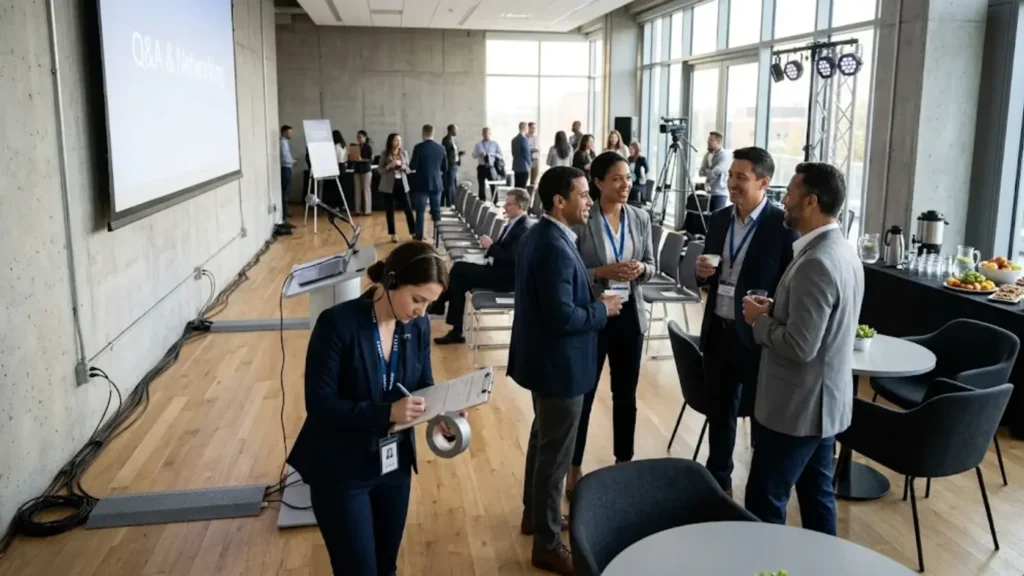
Types of Event Insurance Coverage
Event insurance can include several types of protection. The right combination depends on the event’s activities, financial exposure, and contractual requirements.
1. Event General Liability Insurance
Event general liability insurance is designed to address certain third-party bodily injury and property damage claims arising from an insured event.
For example, a visitor attending a product demonstration might trip over presentation equipment and suffer an injury. If the business is legally responsible and the claim falls within the policy’s coverage, insurance may help pay covered damages and legal defense expenses.
Some policies also include coverage for certain accidental damage to rented premises.
Many venues require organizers to provide proof of liability insurance before allowing an event to take place. Business owners should confirm the required limits and any additional insured conditions before purchasing coverage.
2. Event Cancellation Insurance
Event cancellation insurance may help reimburse eligible nonrefundable expenses when an event must be canceled, interrupted, or postponed because of a covered reason.
Potential covered circumstances may include:
- Certain severe weather conditions
- Unexpected illness or injury involving an insured key person
- Venue unavailability resulting from a covered incident
- Certain vendor failures
- Other specifically listed events in the policy
For example, a company may have already paid deposits to a venue, caterer, and equipment rental provider. If a covered incident prevents the event from taking place, cancellation insurance may help recover eligible expenses within the policy limits.
However, voluntary cancellation, poor ticket sales, changing business plans, and ordinary financial difficulties are not automatically covered.
Businesses should review the policy’s covered reasons, exclusions, purchase deadlines, and reimbursement conditions before relying on this protection.
The National Association of Insurance Commissioners’ event insurance guidance provides additional information about common event insurance considerations.
3. Host Liquor Liability Insurance
Some businesses serve complimentary alcoholic beverages during networking events, corporate celebrations, fundraisers, and customer gatherings.
If an intoxicated guest later causes injury or property damage, the business could face a claim depending on the circumstances and applicable law.
Host liquor liability coverage may address certain alcohol-related claims when a business provides alcohol without selling it. However, coverage depends on the policy wording and the circumstances of the incident.
Businesses that sell alcohol, operate a bar, or arrange alcohol service through a licensed provider may face different insurance requirements.
Before purchasing coverage, explain exactly how alcohol will be served, who will provide it, and whether guests will pay for drinks.
4. Property and Equipment Coverage
Business events often involve expensive equipment and rented items, including:
- Projectors and presentation screens
- Sound systems and microphones
- Lighting equipment
- Exhibition displays
- Computers and tablets
- Furniture and staging
- Promotional materials
Some event insurance arrangements offer property protection or allow additional coverage to be purchased.
However, event liability insurance does not automatically protect the organizer’s equipment against theft, accidental damage, or loss.
Businesses should check whether their existing commercial property or inland marine insurance covers equipment used away from their regular premises.
It is equally important to understand who is financially responsible for rented equipment under the rental agreement.
5. Additional Insured Coverage
A venue may require the event organizer to list its owner, property manager, or another organization as an additional insured under the event liability policy.
This endorsement may extend certain liability protection to the named party for covered claims connected with the insured event.
Business owners should understand that a certificate of insurance provides evidence of coverage but does not independently change the policy or create additional protection.
Always confirm that the actual policy and endorsements satisfy the venue’s requirements.
Which Business Events May Need Insurance?
Different events create different financial and liability exposures. A small indoor meeting may involve fewer risks than a public outdoor festival or a large product demonstration.
| Business Event | Potential Insurance Considerations |
|---|---|
| Product launch | Guest injuries, venue damage, equipment |
| Trade show | General liability, exhibitors, rented property |
| Business conference | Attendee injuries, cancellation, venue requirements |
| Corporate party | Guest liability, alcohol-related risks |
| Fundraiser | Public attendance, volunteers, vendors |
| Grand opening | Customer injuries, property damage |
| Outdoor business event | Weather-related cancellation, temporary structures |
| Customer appreciation event | Guest safety, catering, venue requirements |
This list provides a starting point rather than a guarantee of coverage. Large festivals, sporting activities, entertainment, amusement equipment, and temporary structures may require specialized insurance arrangements.
Does Regular Business Insurance Cover Special Events?
Some small businesses already carry commercial general liability insurance and wonder whether it automatically covers conferences, trade shows, company parties, or other special events.
The answer depends on the existing policy.
Commercial general liability insurance may cover certain events connected with normal business operations. However, coverage depends on policy definitions, exclusions, endorsements, event size, location, and planned activities.
For example, a consulting company holding a small meeting at its regular office may have a different exposure from the same company organizing a public conference at a rented convention center.
Before purchasing separate coverage, ask your insurance agent to review:
- Whether the event falls within the existing policy.
- Whether the venue must be added as an additional insured.
- Whether rented equipment and temporary structures are covered.
- Whether alcohol-related activities are excluded.
- Whether contractors and vendors need separate coverage.
- Whether higher liability limits are required.
If existing coverage does not adequately address the event, a separate policy or endorsement may be appropriate.
Businesses with larger liability exposures may also want to understand how commercial umbrella insurance provides additional liability protection.
Do Event Vendors Need Their Own Insurance?
Yes. Vendors should not assume that the event organizer’s insurance protects their independent business activities.
A caterer, photographer, DJ, performer, equipment rental company, or exhibitor may create risks through their own work.
For example, a catering company could accidentally damage the venue while setting up its equipment. A photographer might face a claim involving accidental property damage during an assignment.
Depending on their operations, these businesses may need commercial general liability, commercial auto, professional liability, or equipment coverage.
Event organizers should request proof of insurance from relevant vendors when required by contracts or risk-management procedures.
Contracts should also explain who is responsible for equipment, setup, cleanup, transportation, and accidental damage to rented property.
How Much Does Event Insurance for Small Business Cost?
The cost of event insurance depends on the event’s characteristics and the type of protection selected. There is no single premium that applies to every business gathering.
A small indoor networking event with limited attendance may have different insurance requirements from a multi-day outdoor festival involving temporary structures, entertainment, and alcohol service.
Insurers generally evaluate several factors when preparing a quote.
Factors That Affect Event Insurance Costs
1. Type of Event
A business meeting, public exhibition, fundraiser, and outdoor festival can present different risks. Certain activities may require specialized coverage.
2. Number of Attendees
The expected attendance can influence the insurer’s assessment of potential liability exposure.
3. Event Duration
A short gathering may have different coverage requirements from a multi-day conference or exhibition.
4. Venue and Location
The type of venue, its contractual requirements, and the event location may affect available coverage and pricing.
5. Liability Limits
Higher liability limits provide greater financial protection but may also increase the premium.
6. Alcohol Service
Serving or selling alcohol can introduce additional liability considerations. Businesses should provide accurate information about alcohol arrangements when requesting quotes.
7. Cancellation Protection
Adding cancellation coverage may increase the premium because it protects against a different category of financial risk from third-party liability.
8. Special Activities and Equipment
Live entertainment, temporary stages, public demonstrations, and rented equipment may require additional protection or specialized underwriting.
For an accurate estimate, request quotes using the actual event details. Online averages should not be treated as guaranteed prices for a particular business.
How to Choose the Right Event Insurance Policy
Choosing event insurance requires more than selecting the lowest quote. Business owners should make sure the policy matches their activities, financial exposure, and contractual obligations.
Step 1: Identify the Event’s Main Risks
Prepare a list of planned activities and consider:
- How many people will attend?
- Is the event open to the public?
- Will food or alcohol be served?
- Will rented equipment be used?
- Are temporary stages or structures involved?
- Will vendors or contractors provide services?
- Is the event indoors or outdoors?
These details help an insurance professional identify potential coverage requirements.
Step 2: Review the Venue Contract
Read the venue agreement carefully before purchasing insurance.
Some venues specify minimum liability limits, additional insured requirements, and deadlines for submitting proof of coverage.
Ask the venue to provide its insurance requirements in writing and share them with your insurance agent.
Step 3: Evaluate Cancellation Risks
Calculate the deposits and other expenses that could become nonrefundable if the event cannot proceed.
Consider payments made to venues, caterers, equipment rental companies, entertainment providers, speakers, and event production companies.
Review which cancellation reasons are covered and which are excluded.
Step 4: Check Vendor Insurance
Request evidence of appropriate insurance from vendors when necessary.
Confirm that their coverage is relevant to the services they provide. Do not assume that a vendor’s insurance automatically protects the event organizer.
Step 5: Compare Limits and Exclusions
Before selecting a policy, review:
- Per-occurrence liability limits
- Aggregate limits
- Property damage provisions
- Cancellation coverage limits
- Deductibles
- Liquor liability terms
- Additional insured endorsements
- Exclusions for specific activities
- Claims reporting requirements
Ask the insurer to explain any provision you do not understand.
Step 6: Purchase Coverage Before the Deadline
Do not wait until the event is about to begin.
Some policies have strict deadlines for purchasing cancellation coverage, while venues may require proof of liability insurance well in advance.
Buying early gives the business more time to review the policy and arrange the required documents.
Common Event Insurance Mistakes Small Businesses Should Avoid
Even when an event is insured, misunderstandings can leave important coverage gaps.
Assuming Every Event Is Eligible: Some policies are designed for private celebrations and may not cover commercial business functions. Confirm that the insurer accepts the exact event type.
Buying Only Liability Coverage: Liability and cancellation insurance protect against different risks. Coverage for guest injuries does not automatically reimburse nonrefundable event deposits.
Ignoring Alcohol-Related Risks: Do not assume host liquor liability is automatically included or sufficient for every event.
Overlooking Venue Requirements: A venue may require specific liability limits or additional insured endorsements. Review these requirements early.
Assuming Vendors Are Covered: Independent vendors should evaluate their own commercial insurance. Clarify contractual responsibilities before the event.
Waiting Until the Last Minute: Late applications can create problems when insurers have purchase deadlines or require additional information.
Frequently Asked Questions About Event Insurance for Small Business
Is event insurance necessary for a small business?
It may be appropriate when a business organizes an event involving liability, property, or cancellation risks it cannot comfortably absorb. The need depends on the event, existing insurance, venue contract, and planned activities.
What does small business event insurance usually cover?
Depending on the policy, it may cover certain third-party bodily injury and property damage claims, event cancellation expenses, liquor-related liability, or selected property exposures. Not every policy includes all these protections.
Does general liability insurance cover business events?
It may cover some events connected with normal business operations. However, coverage depends on policy wording, exclusions, endorsements, and event details. Owners should confirm coverage with their insurer before relying on an existing policy.
Does event insurance cover cancellation due to bad weather?
Some cancellation policies cover specified weather-related circumstances, but protection is not automatic. The policy may define covered weather conditions and impose requirements for cancellation or postponement.
Do small business owners need liquor liability coverage?
Businesses serving or selling alcohol should review their potential liability exposure. Host liquor liability may be relevant when alcohol is provided without charge, while businesses selling alcohol may need separate liquor liability protection.
Can an event venue require insurance?
Yes. A venue may require an organizer to carry event liability insurance, meet specified limits, and provide a certificate of insurance. It may also request an additional insured endorsement.
Do vendors need separate event insurance?
Vendors should evaluate their own commercial coverage based on the services they provide. Caterers, photographers, entertainers, and equipment suppliers should not assume the organizer’s policy protects their businesses.
When should a business purchase event insurance?
Businesses should review coverage during the planning process, especially before making significant nonrefundable deposits or signing venue contracts. Some policies have strict purchase deadlines.
Final Thoughts
Business events create valuable opportunities to connect with customers, introduce products, and build professional relationships. However, organizing a gathering also introduces risks involving attendees, venues, vendors, equipment, and unexpected cancellations.
Event insurance for small business can help address these exposures when the selected policy matches the event and its activities. Liability protection, cancellation coverage, and liquor-related protection may all be relevant, but they should never be assumed to come automatically in one package.
Before purchasing a policy, review the venue contract, identify potential risks, confirm vendor responsibilities, and compare coverage limits and exclusions. A licensed insurance professional can help determine whether existing commercial coverage is sufficient or whether a separate event policy is appropriate.
The goal is not to insure every possible inconvenience. It is to understand the financial risks involved and choose protection that fits the business.
admin
Practical business guides, useful tools, and technology insights from BusinessNexa.



Work smarter with practical business tools.
Explore useful calculators, guides and tools for modern businesses.