
Gross Profit vs Operating Profit: What’s the Difference?
Revenue tells you how much a business sells, but it does not tell you how much of that revenue remains […]
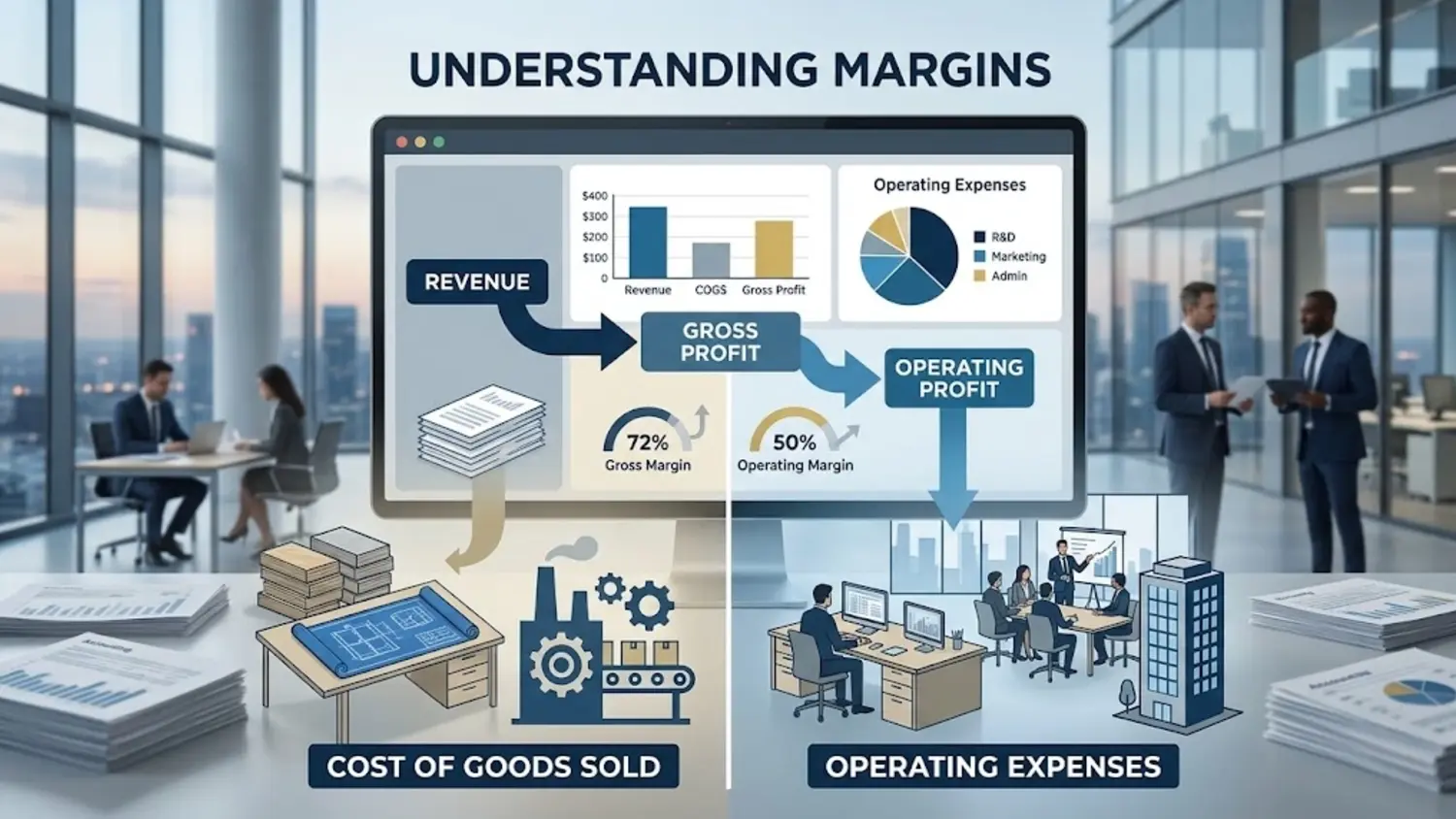

Revenue tells you how much a business sells, but it does not tell you how much of that revenue remains after costs.
That’s why businesses use different levels of profit.
Two of the most useful are gross profit and operating profit.
Gross profit looks at what remains after the cost of goods sold or applicable cost of revenue is deducted. Operating profit goes a step further by accounting for operating expenses.
In simplified form:
Gross Profit = Revenue − COGS
Operating Profit = Gross Profit − Operating Expenses
Understanding the difference helps you identify whether a company’s profitability challenge comes from the cost of what it sells, the cost of running the business, or both.
What Is Gross Profit?
Gross profit is the amount remaining after applicable cost of goods sold, or COGS, is deducted from revenue.
The basic formula is:
Gross Profit = Revenue − COGS
Suppose an online retailer generates:
- Revenue: $500,000
- COGS: $300,000
Its gross profit is:
$500,000 − $300,000 = $200,000
The company has $200,000 remaining after those direct costs.
That is not necessarily its final profit because the business still has operating expenses and potentially other expenses to account for.
What Is Operating Profit?
Operating profit measures what remains after operating expenses are deducted from gross profit.
A simplified formula is:
Operating Profit = Gross Profit − Operating Expenses
Using the earlier example:
- Gross profit = $200,000
- Operating expenses = $120,000
Therefore:
$200,000 − $120,000 = $80,000
Operating profit is $80,000.
It provides a broader view of the profitability of the company’s normal operations.
Gross Profit vs Operating Profit
| Measure | Gross Profit | Operating Profit |
|---|---|---|
| Starts with | Revenue | Gross profit |
| Deducts | COGS / applicable cost of revenue | Operating expenses |
| Focus | Direct economics of products or services | Profitability after operating costs |
| Includes operating expenses? | No | Yes |
| Same as net profit? | No | No |
The simplest distinction is:
Gross profit stops after the cost of sales.
Operating profit continues after operating expenses.
Gross Profit Formula and Example
The basic calculation is:
Gross Profit = Revenue − COGS
Suppose:
- Revenue = $750,000
- COGS = $450,000
Then:
$750,000 − $450,000 = $300,000
Gross profit is $300,000.
Businesses should classify costs consistently according to their accounting framework and financial statements rather than assuming every company presents costs in exactly the same way.
Operating Profit Formula and Example
A simplified formula is:
Operating Profit = Revenue − COGS − Operating Expenses
Suppose:
- Revenue = $750,000
- COGS = $450,000
- Operating expenses = $180,000
Then:
$750,000 − $450,000 − $180,000 = $120,000
Operating profit is $120,000.
Gross Profit Margin vs Operating Profit Margin
Dollar amounts are useful, but margins can make profitability easier to compare.
Gross Profit Margin
The formula is:
Gross Profit Margin = Gross Profit ÷ Revenue × 100
Using $300,000 gross profit and $750,000 revenue:
$300,000 ÷ $750,000 × 100 = 40%
The gross margin is 40%.
Operating Profit Margin
The formula is:
Operating Profit Margin = Operating Profit ÷ Revenue × 100
Using $120,000 operating profit:
$120,000 ÷ $750,000 × 100 = 16%
The operating margin is 16%.
A useful visual explanation can make these differences easier to understand. The Corporate Finance Institute’s profitability-ratios lesson covers gross, operating, and net profit margins along with ROE.
Recommended YouTube Resource
Why Gross Profit Matters
Gross profit helps answer:
How much remains after the direct cost associated with what we sell?
It can help a business investigate:
- Supplier cost increases
- Pricing changes
- Discounts
- Product mix
- Production efficiency
- Direct fulfillment costs
A business can report strong revenue growth while its gross margin declines. That may indicate that direct costs are increasing faster than sales.
Why Operating Profit Matters
Operating profit answers a broader question:
After paying the costs required to run the business, how much operating profit remains?
Operating expenses can include areas such as:
- Sales
- Marketing
- Administration
- Research and development
- Office expenses
- Technology
- Certain payroll costs
A company can therefore have a strong gross margin while producing a much weaker operating margin if it spends heavily to run or expand the business.
Can Gross Profit Rise While Operating Profit Falls?
Yes.
Suppose a company reports:
| Year 1 | Year 2 | |
|---|---|---|
| Revenue | $1M | $1.2M |
| Gross profit | $400K | $450K |
| Operating expenses | $250K | $390K |
| Operating profit | $150K | $60K |
Revenue increased.
Gross profit increased.
But operating profit fell because operating expenses increased substantially.
This is a good example of why revenue growth alone is not enough to evaluate financial performance.
Is Operating Profit the Same as Net Profit?
No.
Operating profit generally comes before items such as interest and income taxes.
A company could therefore have positive operating profit but considerably lower net income after non-operating expenses and taxes.
This distinction is important when reading an income statement.
Which Measure Should You Use?
The answer depends on the question.
Use gross profit when you want to understand the economics of the products or services being sold.
Use operating profit when you want to understand profitability after the broader costs of running the business.
Use both when you want to diagnose where profitability is changing.
For example:
- Falling gross margin → investigate direct costs, pricing, and product mix.
- Stable gross margin but falling operating margin → investigate operating expenses.
- Rising revenue but falling operating profit → investigate whether growth is becoming less efficient.
How These Measures Fit Into Broader Business Analysis
Gross and operating profit are only part of financial analysis.
You can also examine:
- Revenue growth
- Cash flow
- Debt
- Liquidity
- Net profit
- Business model
- Financial ratios
For a broader framework, see our guide to company fundamentals.
Common Mistakes
Calling Gross Profit Net Profit
Gross profit is an earlier profitability measure and is not the final earnings figure.
Assuming Higher Revenue Means Higher Profit
Revenue can rise while margins decline.
Ignoring Operating Expenses
A strong gross margin does not guarantee strong operating profitability.
Comparing Companies Without Context
Industry, business model, scale, and growth strategy can affect margins.
Looking at Only One Period
A single quarter or year may contain unusual events. Trends can provide more context.
Frequently Asked Questions
What is the main difference between gross profit and operating profit?
Gross profit is revenue minus applicable COGS or cost of revenue. Operating profit goes further by accounting for operating expenses.
Is gross profit higher than operating profit?
Generally, yes, because operating expenses are deducted after gross profit.
Can operating profit be negative?
Yes. Operating expenses can exceed gross profit.
Is gross margin the same as operating margin?
No. Gross margin measures profitability after direct costs, while operating margin also reflects operating expenses.
Why should businesses track both?
They reveal different parts of the business. Gross profit helps evaluate direct economics, while operating profit shows how the broader operation is performing.
Final Takeaway
The easiest way to remember gross profit vs operating profit is:
Gross profit = revenue after applicable direct costs.
Operating profit = gross profit after operating expenses.
Neither measure tells the entire story by itself.
Looking at both can help a business identify whether profitability is being affected by the cost of selling its products or services, the cost of operating the business, or both.
admin
Practical business guides, useful tools, and technology insights from BusinessNexa.



Work smarter with practical business tools.
Explore useful calculators, guides and tools for modern businesses.